
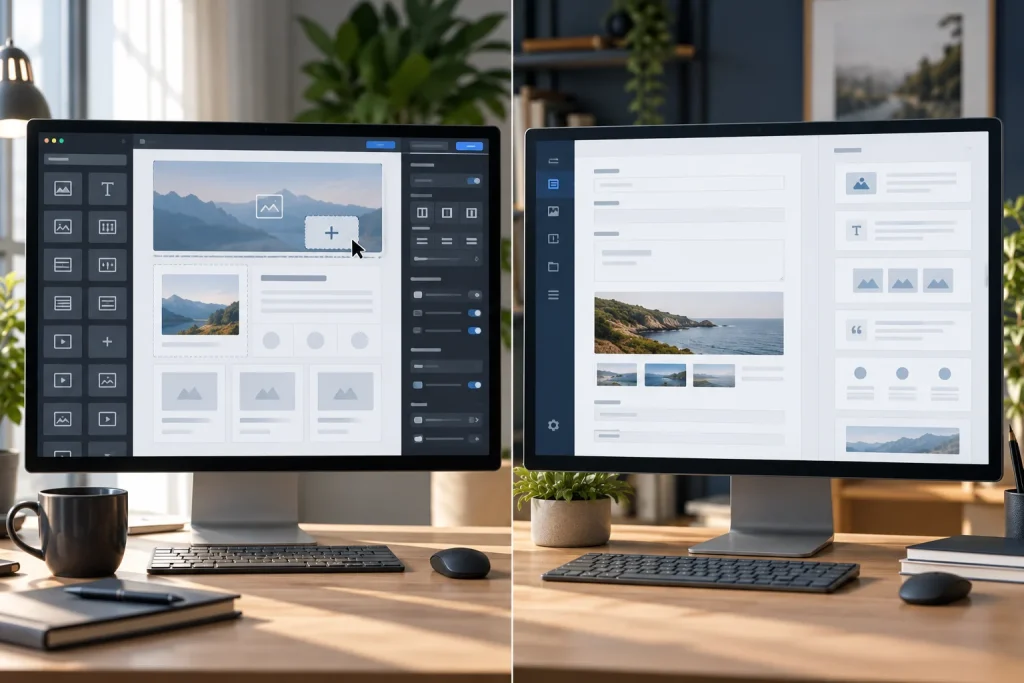
If your current WordPress site uses a page builder, you may already know the downside without knowing the technical name for it. You open a page to change a service or case study and find dozens of layout controls, spacing settings and widgets. One innocent change shifts something on mobile. Staff stop touching the site because nobody wants to be the person who breaks it.
A bespoke WordPress build takes a different approach. Instead of giving every editor control over the design, it gives them control over the content they actually need to maintain. That is what you are paying for: a website and CMS structured around the business rather than a generic set of page-building tools. That is also how I approach bespoke WordPress web design.
What a page builder is good at
Page builders such as Elementor can be useful. They are quick to work with, they give non-developers visual control and they can be a sensible choice for smaller sites, campaigns or teams that genuinely need to create layouts themselves.
The trade-off is that the flexibility sits in the editor. Every page can become a collection of rows, columns, widgets, responsive settings and one-off decisions. The more people edit the site, the easier it is for layouts to drift or for routine updates to become more complicated than they should be.
What bespoke WordPress changes for the client
My approach uses WordPress, PHP, Advanced Custom Fields Pro and Flexible Content. I build reusable components for the types of content the site actually needs, then expose the relevant fields in the admin.
A case study can ask for the title, challenge, solution, results and images. A service page can have structured sections for the opening message, benefits, proof, FAQs and calls to action. The editor changes the content without having to recreate the design each time.
That usually gives the business more confidence to keep the website current because the CMS feels like the website rather than a design tool.
Bespoke does not mean rigid
A structured CMS is not the same as a locked-down site. Flexible Content lets the client choose from approved sections, change their order and build pages from components that already follow the design system.
The useful freedom is there. What disappears is the need to make low-level design decisions every time somebody publishes a page.

Performance depends on the finished build
Page builders often carry extra markup, scripts and styles because they need to support many different modules. That can add weight. It does not mean every page-builder site is slow, and it certainly does not mean every bespoke theme is fast.
Performance depends on the whole site: hosting, media, plugins, third-party scripts, tracking and how the theme has been developed. A bespoke build gives the developer more control over what is included, which makes it easier to keep the front end focused on what the project actually uses.
Future changes are where the difference becomes obvious
Ask how the site will handle a normal business change a year after launch. Add a new service. Publish another case study. Introduce a new location. Change the call to action. Add a content type the original site did not have.
With a structured build, those changes can often be added to the existing component system. The next developer can see where the templates, fields and logic live. They are not trying to reverse-engineer a collection of one-off page settings.
SEO still depends on the content and structure
Neither a bespoke theme nor a page builder makes a website rank. Search visibility still depends on useful pages, sensible internal linking, technical health, clear headings and evidence that supports the service.
The build matters because it affects how easy those things are to maintain. A clean template and structured content model can make it easier to keep important pages consistent and avoid accidental layout or heading changes when the site grows.

Maintenance is easier when the architecture is obvious
Any WordPress website needs maintenance. Themes, plugins, PHP versions and hosting environments change. The advantage of a well-structured bespoke theme is that the code and content model have a clear purpose.
A suitable WordPress care plan can look after updates and ongoing support, but maintainability starts with the build itself.
Which route should you choose?
A page builder can be the right tool when visual autonomy matters more than a tightly controlled content system. A modest site with somebody confident managing layouts may not need bespoke development at all.
Bespoke WordPress tends to suit established businesses that want a more distinctive site, cleaner content management, room for future development and less dependency on a generic builder interface.
If you are deciding whether to rebuild an existing page-builder site or commission something more structured, book a call. I can look at how the site is being used now and show you what would actually improve for the people maintaining it as well as the people visiting it.