
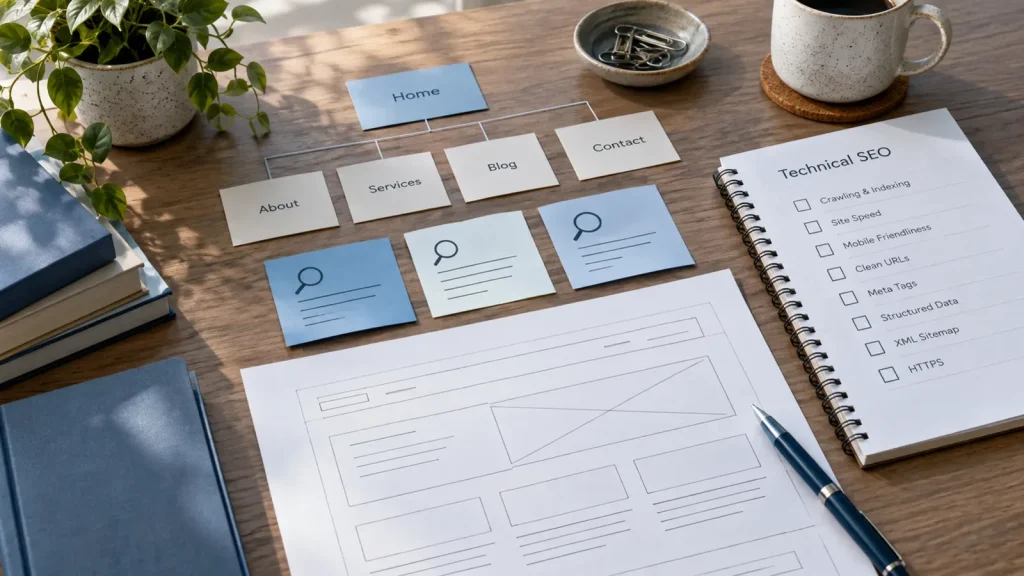
You’re comparing quotes for a new website. One developer says SEO is included. Another lists “SEO setup” as an extra. A third promises a search-friendly website but can’t explain what that means. It’s difficult to compare prices when everyone’s apparently selling the same thing under different names.
SEO included in web design should mean the finished website has sensible foundations for search engines and customers: accessible pages, clear headings, useful content, working links and the right technical settings. It doesn’t automatically mean ongoing SEO work or guaranteed rankings. I’ve spent years working on both website builds and search visibility, and I’d want those responsibilities defined before anybody starts charging you.
1. What should “SEO included” actually cover?
A developer building your website should understand how its structure affects search visibility. The basics aren’t mysterious extras. They include pages that can be reached, navigation people can use and content that clearly describes your services.
Ask for a written list of deliverables rather than accepting an “SEO-friendly” label. Google provides its own SEO Starter Guide, which is a useful reference for understanding the fundamentals. You don’t need to master it; you need a supplier who can explain which parts are relevant to your project.
2. Basic website SEO versus ongoing SEO work
These are connected services, but they aren’t the same job. A website can be built correctly and still struggle to appear for competitive searches. Other businesses have established content, links, reviews and years of visibility. Launching a new site doesn’t make that competition disappear.
| During a website build | Usually ongoing SEO work |
|---|---|
| Page structure and sensible URLs | Search demand and competitor research |
| Page titles and headings | New and improved service content |
| Indexing and crawlability checks | Search performance analysis |
| Redirects when replacing pages | Continual improvement of priority pages |
Some developers bundle more into a project. That’s fine if the work is specified and priced. If you want ongoing help, my guide to monthly SEO retainers explains what to expect.
3. Will you research the searches my customers actually make?
There’s a difference between adding your business name to a homepage title and understanding how customers describe the problem you solve. A roofing company, for example, may need separate pages for roof repairs, replacements and specific service areas. A consultant might have a much narrower set of important searches.
Ask whether keyword and search-intent research is included, what level of detail you’ll receive and how it affects the proposed pages. If the developer hasn’t asked what you sell or who buys it, they probably haven’t done enough to make a meaningful search strategy.
4. Who is responsible for writing search-friendly content?
Perfect page settings won’t rescue a page that doesn’t tell customers anything useful. You need clear explanations of your services, the areas you cover, who you’re suited to and why somebody should contact you.
Find out whether the quote includes content planning, writing, editing or simply uploading what you provide. If AI is used for drafts, somebody still needs to check the facts, remove generic claims and make the content sound like your business. A site full of interchangeable marketing phrases isn’t a persuasive sales tool, whatever the page title says.
5. What happens to my existing Google rankings?
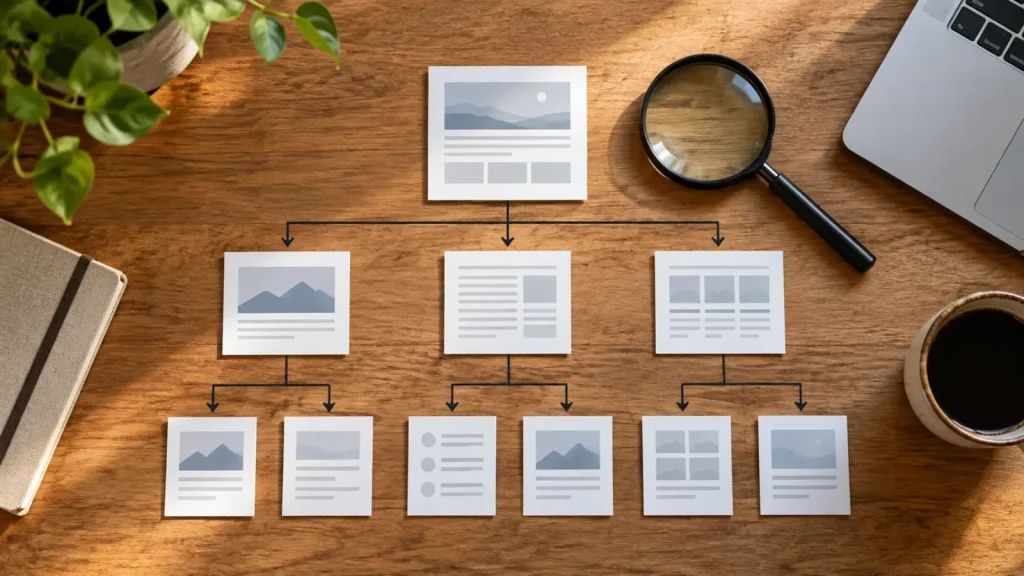
If you’re replacing an established website, this should be discussed before design begins. Existing pages may be earning enquiries. Changing their addresses, removing content or redirecting everything to the homepage can lose useful visibility.
Ask whether the developer will record important existing URLs, decide which pages should be retained, map any necessary redirects and check the new site after launch. Google’s migration guidance recommends maintaining appropriate redirects and updating internal links when URLs change. An existing business has more to protect than a brand-new site.
6. Will the website be technically accessible to search engines?
Important pages need to be crawlable and indexable, and the site should avoid accidental blocks. A developer should check things like robots settings, canonical URLs, XML sitemaps and whether pages return the correct status codes.
Those sound technical, but the business question is simple: can Google discover and understand the pages you want customers to find? Ask for evidence of the checks, not a blanket promise. Structured data can help describe some page information, but extra schema doesn’t compensate for thin content or a broken site.
7. Does SEO include speed, mobile use and accessibility?
Someone arriving from Google still has to use your website. If buttons are difficult to tap, pages jump around or key information is buried, you risk losing the enquiry regardless of where you rank.
Ask how the supplier tests mobile layouts, images, loading behaviour, navigation and forms. Avoid promises of perfect scores in every testing tool. What matters is a website that works reliably for real customers, with problems identified and addressed rather than dismissed as somebody else’s responsibility.
8. What about local SEO and Google Business Profile?
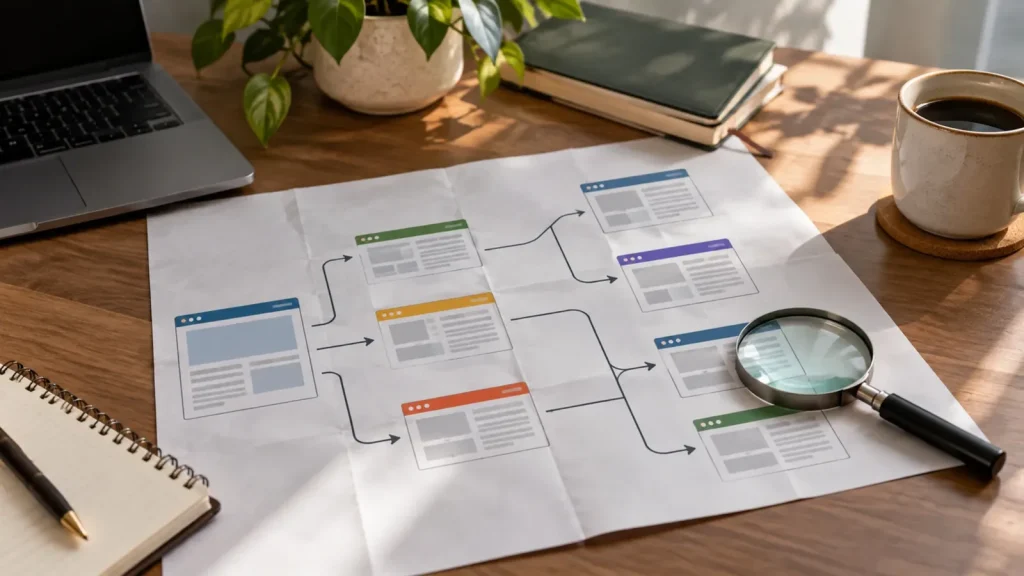
A local electrician, accountant or installer needs different visibility from an online business serving the whole UK. Location relevance, service information and a properly maintained Google Business Profile may all matter.
Ask whether the quote includes any local SEO work, such as consistent business details, appropriate local service pages or advice about the Business Profile. Don’t assume someone building a website will also manage your Google listing, reviews or ongoing local visibility. Those are separate tasks unless the proposal says otherwise.
9. How will you prove the SEO work has been completed?
“It’s optimised” isn’t a useful handover. I would expect a clear list of what was done and which items need further work. For a replacement site, that might include a page-to-redirect mapping, key SEO settings, checked forms and the search tools connected to the new website.
Ask who has access to Google Search Console, whether your business owns the account and how you’ll measure what happens after launch. For a new site, meaningful ranking and enquiry results take time. There shouldn’t be invented before-and-after figures or promises nobody can substantiate.
10. Which SEO promises should make you cautious?
Be sceptical of guaranteed first-place rankings, a fixed number of mysterious “SEO tricks”, promises that schema will automatically put you into AI answers or packages that never mention your customers. Search engines don’t offer a guaranteed position in exchange for a developer ticking boxes.
A reputable supplier should be able to describe what they control, what they don’t and how decisions will be made. If you’re reviewing proposals, the questions in my web developer hiring checklist will help you compare them sensibly.
Agree the SEO scope before you pay
You’re entitled to know whether you’re buying a technically sound website, proper search research, ongoing marketing or some combination of the three. Ask for the deliverables in writing and make sure the quote matches what your business needs.
If you’re commissioning a website and want a clear distinction between development and SEO work, book a call. Tell me what the business needs to achieve and I’ll explain which foundations belong in the build and which improvements may need ongoing work.