

If you are pricing a new business website in the UK, a sensible starting point is usually the low thousands rather than a few hundred pounds. On my own website, the current starting points are £1,800 for an Essentials Website, £2,880 for a Growth Website and £3,600 for a Premium Website, with larger or more complex projects quoted separately.
Those figures are useful because they show how quickly scope changes the cost. A focused five-page site with clear content is a different job from a site with several services, migration work, bespoke functionality, case studies, integrations and a more involved enquiry journey. The price should reflect the work the website actually needs, not an arbitrary page count.
What do you get for £1,800, £2,880 or £3,600?
My current website packages are starting points rather than fixed prices for every project. The £1,800 Essentials level is aimed at an established small business that needs a focused professional website with the right foundations. The £2,880 Growth level allows for a deeper service structure and clearer conversion flow. The £3,600 Premium level suits a more substantial site with stronger proof, greater content depth and more developed enquiry journeys.
A project moves beyond those starting points when it needs custom functionality, complex migration, ecommerce, integrations, a larger content requirement or extra planning. That is why two websites that look similar on the surface can involve very different amounts of work underneath.
Why business website quotes vary so much
You can ask three suppliers for “a new website” and receive three very different numbers. Often they are not actually quoting for the same thing.
One quote may assume you are supplying finished copy, photography and a clear page structure. Another may include discovery, wireframing, content planning, conversion work, migration, SEO foundations and testing. One may use an existing template. Another may design and build the site around the business. Unless the scope is visible, comparing the final price tells you very little.
A small brochure site can still be the right answer
Not every business needs a large bespoke website. If you have one clear offer, a small number of services, good content ready to go and a straightforward enquiry route, a focused brochure site can be enough.
It still needs to work properly on mobile, explain the business clearly, give visitors confidence and make contact easy. “Simple” should mean the scope is contained, not that the basics have been skipped.
When the website needs to work harder
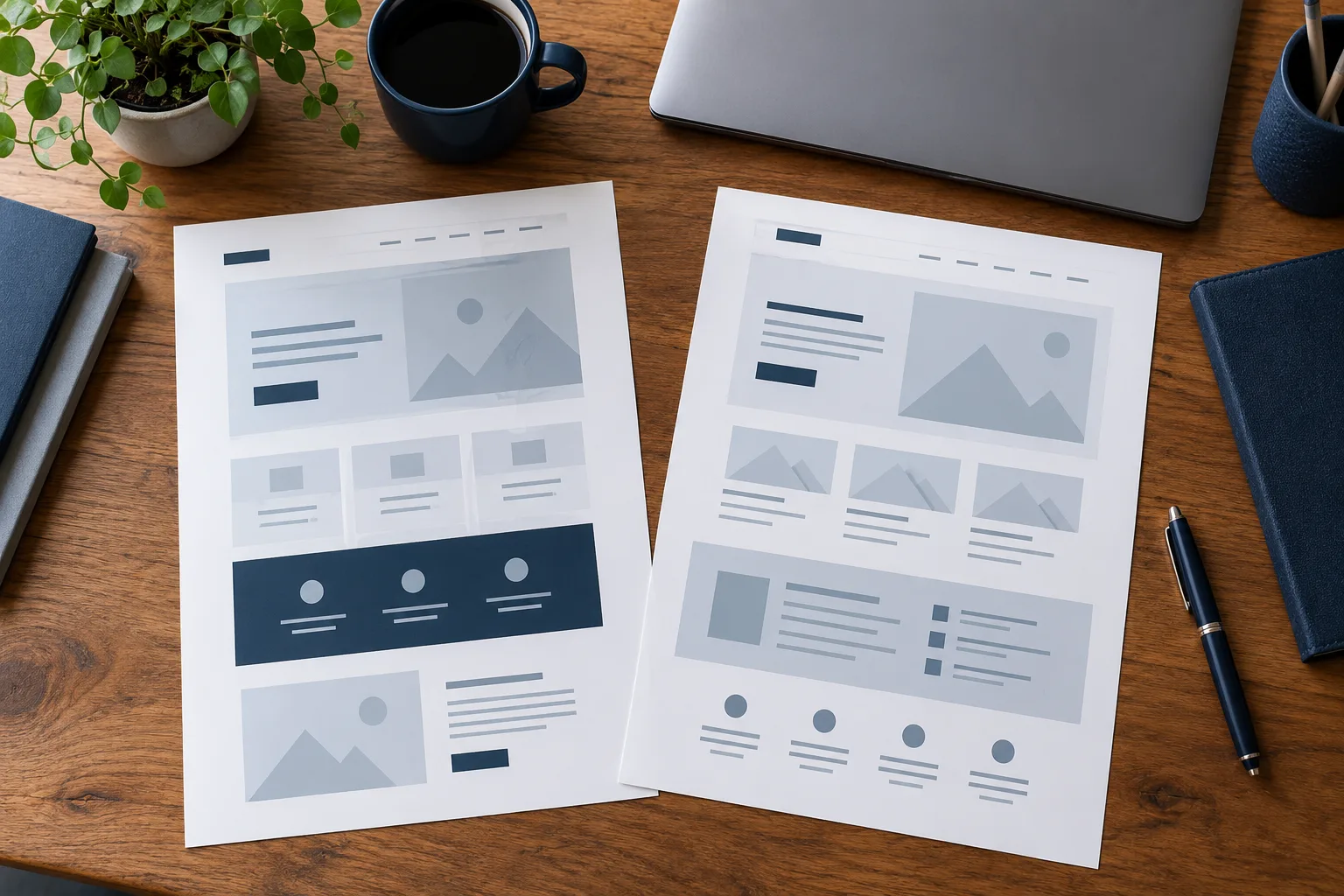
The investment increases when the site is expected to do more commercially. An established business may need several service pages, clearer positioning, proof, case studies, better internal linking, stronger enquiry routes and a content structure that can grow over time.
This is where a bespoke WordPress build can make sense. I use WordPress with Advanced Custom Fields so the editing experience can be built around the content the client actually maintains, rather than handing them a generic page-builder canvas and expecting them to manage the design as well as the content.
Cheap websites are not automatically bad value
A lower-cost website can be perfectly sensible when the requirement is genuinely small. Problems start when the saving comes from removing work the business will need later.
A rigid template, weak service pages, poor mobile layouts, no migration planning or a CMS nobody wants to touch can make the initial saving disappear quickly. You end up paying for workarounds, sending paid traffic to weak pages or rebuilding the site before it has had a chance to earn back the original spend.
What usually pushes the cost up?
The biggest cost drivers are normally straightforward: more useful pages, more design work, more content planning, custom functionality, integrations, migration, ecommerce, additional testing and a more complex approval process.
Content readiness matters too. A five-page site is not automatically quick if nobody has decided what the pages need to say. Planning the message, structure and calls to action can take more time than building the page itself, and it is often where much of the commercial value sits.

What is worth paying for?
Spend money on the work that reduces risk and makes the website easier to use, manage and develop. That usually includes proper page planning, clear content structure, responsive development, tested forms, sensible SEO foundations and a CMS the business can actually work with.
It is also worth thinking about what happens after launch. Hosting, updates, backups and support are separate from the build unless they are explicitly included. A WordPress care plan can make sense where the website is important enough that somebody needs to be responsible for keeping it healthy.
How to compare website proposals without getting lost
Ask each supplier to show exactly what is included. Who plans the structure? Who writes or supplies the copy? Is the design tailored? What happens to the existing content and URLs? Are forms, redirects, SEO basics, testing and launch support included? What counts as extra work?
Then look at relevant website case studies. They will tell you far more about how someone approaches real projects than a list of features on a proposal.
Budget for the project you actually need
If your current website no longer represents the business, start by listing what is wrong with it and what needs to change. That gives you something useful to price. These signs your website may be costing enquiries can help if you are still deciding whether the site needs focused improvements or a full rebuild.
If you are considering a new website and want a realistic view of scope and cost, book a call. I can look at what the website needs to do and tell you which level of build is likely to make sense before you commit to a project.